
This Month's Blog is a Doozy!
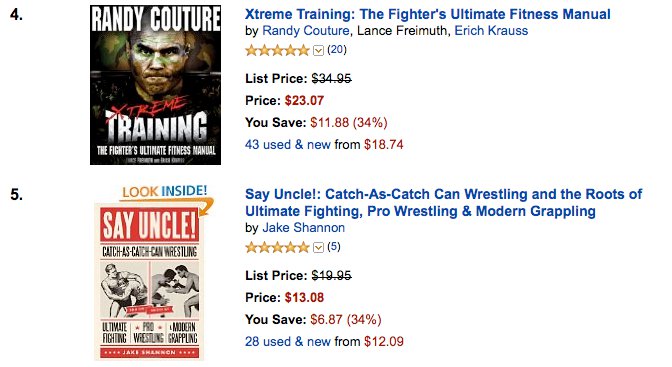
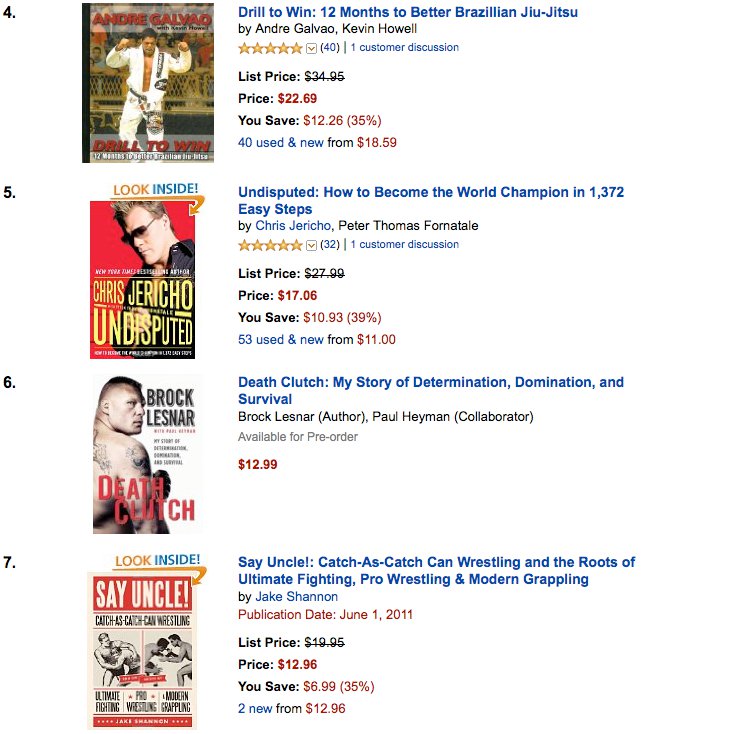
1) THANK YOU! It's Official, "Say Uncle" is a BEST-SELLER (in TWO Amazon.com categories!)
Number 5 in best selling MMA books!
...and number 7 in best selling WRESTLING books
Fun to hear Mauro and Frank Shamrock dropping all the CACC terminology during Josh Barnett's fight last night. I know Mauro recommended it to a friend on his twitter after reading the review copy of http://SayUncleBook.com that he got when I was on his radio show a few weeks back! http://twitter.com/!/mauroranallo/status/78624035587633153 Also, check out the great articles by Kid Nate and KJ at BloodyElbow.com:Kid Nate Reviews 'Say Uncle'
Strikeforce Judo Chop: Josh Barnett's Invisible Grappling by KJ Gould
2) Next Certification Camps Dates Open, HURRY (Early Bird Registration Ends Fast!) Our next camp is accepting registration applications now. Right now you can save a few hundred dollars by taking advantage of the early-bird pricing if you act now. Here is Scientific Wrestling Assistant Coach Sam Kressin's write-up of the last camps!Catch Me If You Can...!/
Also, an other Scientific Wrestling Assistant Coach Jesse Marez just took 1st Place in the Los Angeles International Jiu-Jitsu Tournament in his division! This is the second tournament this year that he has taken gold and dominated the competition. CONGRATULATIONS JESSE!!
Enjoy this short clip from our last Cert Camp:
3) Josh Barnett DOMINATES again... (and plugs the PUNISHING RIDES DVD)
4) Eddie Goldman on NHB Radio on the Strikeforce Heavyweight Tournament, and Catch Wrestling Enjoy this great radio show from Eddie Goldman as he discusses CACC!http://nhbnews.podomatic.com/entry/2011-06-19T12_45_31-07_00
5) Kiyoshi Tamura For those of you who subscribe to this site, you can watch ALL of Tamura's old matches in the UWFi (along with Sakuraba, Severn, Albright, and more) in our UWF-Bushido section. We have over 70 hours of EXCLUSIVE UWFi fight footage!Tamura vs. Renzo
Tamura vs Frank Shamrock
6) Old School Stuff! Ed Lewis & Gus Sonnenberg Training (1929) and more...
7) Zen of the 21st Century by Ted Pelc History has been made. The very first "official" Seiken Shinkage-ryu event took place on May 24th at the mecca of martial arts and all contact sports, Tokyo's Korakuen Hall. The previous "Shin Budoh (new Budoh) 'Budoh Seiken' Dai Rei Kai Taikai (number zero tournament)" held on October 29th of last year was a test to see the validity of this new form of Budoh. Many things were learned and it opened up a whole new view of the potential this "new" system has to offer. Now it has officially kicked off with the "Dai Ikkai Bujutsu Taikai (the first Bujutsu tournament)"! Participants from several different disciplines and dojos, such as Real Japan Pro-Wrestling, Pancrase, Battlarts, etc. fought under this new set of Budoh rules. Much like the 'Waikru' dance before a Muay Thai fight or the throwing of salt for purification before a Sumo match, a display of the 'Shinken' or 'Katana' (Japanese sword) took place, a symbol of the Bushi and the indominable Samurai spirit. After displays of 'Iai' with swords and Japanese 'Taiko' (drums) the "preview" of a new beginning, something which I personally believe will be one "replacement" for Sumo which is yet again under scrutiny much like Pro-Wrestling was after the George Hackinshmitt and Frank Gotch scandal many moons ago. Speaking of Sumo, in the eighth and final bout of the night which was an unlimited weight class match up (the rest of the bouts had weight classes) the audience saw a famous former "Sekiwake" of Sumo and current "Sogo Kakutogi" (MMA) fighter Wakashoyo go up against the WAFC Pancration unlimited weight champion and UKF Kick Boxing International Heavyweight champion Yuji Sakuragi from the home of Seiken Shinkage-ryu, the Kogikan. Wakashoyu definitely had the advantage as we use a platform which I like to call the "original octagon" (as Sayama's Shooto was the first MMA style event to use an octogon in the eighties), which is very much like the Sumo's dohyo. I expected him to try to push Sakuragi out of the octogon rather than going for a knock out or submission, and seconds before the bout was about to begin, Wakashoyu took a Sumo stance. In Budoh Seiken, there are many ways to win (getting an "ippon" or controlling your opponent in "seiatsu"), you can simply push your opponent out of the octogon, much like in Sumo, the only difference being that in the event both participants fall out it does not matter who hit first, the bout continues. Sure enough Wakashoyu ran straight into his opponent. Sakuragi was quick to react, as though he anticipated this strategy, blocked this by catching him with a knee strike, quickly moving back and delivered a devastating hook which caught Wakashoyu on the chin sending him down to the floor. The much anticipated bout came to an abrupt end, and it took minutes for Wakashoyu to clear his head and get up. Unlike other contact or ring sports, winning or losing bouts is irrelevant in this style, it is how you carry yourself as a "Budohka" which is important. Nevertheless I could not get over how spectacular the ending was. The new Seiken Shinkage-ryu Kagurazaka Studio enjoyed it's grand opening on April 27th. The main headquarters is a dojo for top level students ready for combat in the original octogon. This new "studio" is for anyone, men and women of all ages, who have an interest in not only learning swordsmanship and Seiken Shinkage-ryu , but also in learning the mechanisms of the mind and trying to understand why we have stress, win or lose bouts in and out of the ring in life, and learn how to be the master of our subconscious programming instead of being mastered by it, which most people are. Youngsters learn "reigi" or the way to carry themselves in a confident but respectful way and how to meet and greet people, which has been on the decline for the past couple of generations. This is not only a fighting system, it is a path to spiritual, mental, emotional, and physical wholeness. It is a lifestyle which not only teaches one to overcome tragedies, disasters, and adversities and to thrive despite them. Seiken Shinkage-ryu hopes to be one of the cures for many of the problems in Japan, and to hopefully spread to the rest of the world to help make this a better place to live in.http://www.budoseiken.jp
8) Phil Maingot Tribute by Nathan Hatton Individuals who make monumental contributions to their chosen field of study often do not receive an equal measure of recognition for their accomplishments. Such was the case with Ottawa's Phil Maingot, also known by the nomme de lutte, Bill Taylor. Among the small group of researchers, writers, and historians who avidly study old-time wrestling history, Maingot was a 'senior statesman,' having devoted the better part of seven decades to the subject by the time he passed away in December of 2010. Far from being a casual enthusiast, Maingot devoted thousands upon thousands of hours to his specialty, collecting rare manuscripts in multiple languages, sifting through newspaper reports, and perusing yellowed, crumbling files to uncover the facts behind many wrestling mysteries. He conducted much of his work out of the National Library of Canada (now Library and Archives Canada) which he frequented since the facility opened at its current location in the late 1960s. His work was meticulous, and, in an era before someone could punch a name into a search engine, print out a pile of results, and profess themselves 'expert' on the subject, Maingot was a bonafide world authority. Among his findings, Maingot uncovered many of the details behind Frank Gotch's fabled trip to the Klondike, overturning nearly a century of misinformation and ballyhoo in the process. He also exposed the story of Dan McLeod's decimation of fabled strongman Louis Cyr in a wrestling match: an incident that, until Mark Hewitt's Catch Wrestling Round Two, had been curiously absent from the historical narrative following the fabled strongman's death in 1912. Besides his attention to primary research, Maingot also sought out many of the old time wrestlers to pick their brains. His interest in wrestling's past began in 1943, and as a youngster, he was unafraid to approach men such as Ed "Strangler" Lewis to ask him how he might have fared in a match against George Hackenschmidt. His precociousness likely made him a bit of a curiosity to some of the wrestlers, and he visited with veterans such as Ernie Dusek in the dressing rooms before matches. In conversing with Dusek, Maingot asked him if he had ever wrestled Stanislaus Zbyszko, to which the famed Riot Squad member replied that he had not, although he had faced his younger brother Wladek at Madison Square Garden. Dusek, although respecting the elder Pole's abilities, informed Maingot that "Wladek was never any good." Maingot also maintained a lengthy pen pal relationship with celebrated world lightweight champion George Bothner, who he subsequently visited at his gym in New York. He contacted Joe Stecher late in the former Nebraskan's life, but although the one-time scissor king was happy to receive a call, he could remember nothing of his former days as the world's heavyweight champion. Sadly, even Ed Lewis, whom he had competed against in arguably the most gruelling legitimate contests in professional wrestling history, had slipped from Stecher's consciousness. Maingot's memory for minutiae, even at an advanced age, was uncanny. He could not only recall the participants and outcomes of significant matches staged from the 1890s through the 1920s, but also details including locations, who won which falls, and at what precise time, and by what method, the falls were scored. He had a similar mental repository when it came to boxing, which he also took a keen interest in. Decades of intensive research, coupled with a detective's mind and encyclopaedic knowledge often led to frustration with published and unpublished accounts that did not evidence a similar level of rigor. Upon reading the paragraph concerning gold rush-era prize fights in Canadian pop historian Pierre Berton's book Klondike, for instance, Maingot wrote the publisher informing them of no less than seven factual errors in the recounting. Conversely, however, he was enthusiastic and unwavering in his praise for certain researchers whose work was of consistently high quality. Although a private man, Maingot was extremely generous in sharing his knowledge and research, some of which has filtered into various wrestling histories over the years, making him a behind-the-scenes contributor to our current understanding of the sport's early history. A passionate supporter for numerous causes, he spent the last few years of his life devoted to trying to get former world middleweight, light-heavyweight, and heavyweight wrestling champion Dan McLeod inducted into the Canadian Sports Hall of Fame. Unfortunately, in a society which undervalues its wrestlers compared to other athletes, his dream has not yet seen fruition. Maingot's death, which occurred several months ago, was not known to those who shared his passion for mat game history until this week. Certainly, not everybody interested in the subject knows of him, but they should. He was a unique and remarkable, if largely unseen, figure in the field.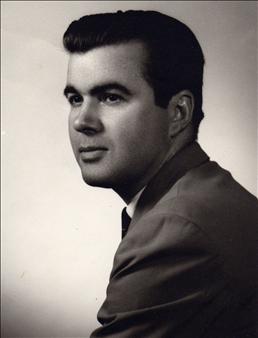
Fun to hear Mauro and Frank Shamrock dropping all the CACC terminology during Josh Barnett's fight last night. I know Mauro recommended it to a friend on his twitter after reading the review copy of http://SayUncleBook.com that he got when I was on his radio show a few weeks back! http://twitter.com/!/mauroranallo/status/78624035587633153 Also, check out the great articles by Kid Nate and KJ at BloodyElbow.com:
2) Next Certification Camps Dates Open, HURRY (Early Bird Registration Ends Fast!) Our next camp is accepting registration applications now. Right now you can save a few hundred dollars by taking advantage of the early-bird pricing if you act now. Here is Scientific Wrestling Assistant Coach Sam Kressin's write-up of the last camps!
3) Josh Barnett DOMINATES again... (and plugs the PUNISHING RIDES DVD)
4) Eddie Goldman on NHB Radio on the Strikeforce Heavyweight Tournament, and Catch Wrestling Enjoy this great radio show from Eddie Goldman as he discusses CACC!
5) Kiyoshi Tamura For those of you who subscribe to this site, you can watch ALL of Tamura's old matches in the UWFi (along with Sakuraba, Severn, Albright, and more) in our UWF-Bushido section. We have over 70 hours of EXCLUSIVE UWFi fight footage!
6) Old School Stuff! Ed Lewis & Gus Sonnenberg Training (1929) and more...
7) Zen of the 21st Century by Ted Pelc History has been made. The very first "official" Seiken Shinkage-ryu event took place on May 24th at the mecca of martial arts and all contact sports, Tokyo's Korakuen Hall. The previous "Shin Budoh (new Budoh) 'Budoh Seiken' Dai Rei Kai Taikai (number zero tournament)" held on October 29th of last year was a test to see the validity of this new form of Budoh. Many things were learned and it opened up a whole new view of the potential this "new" system has to offer. Now it has officially kicked off with the "Dai Ikkai Bujutsu Taikai (the first Bujutsu tournament)"! Participants from several different disciplines and dojos, such as Real Japan Pro-Wrestling, Pancrase, Battlarts, etc. fought under this new set of Budoh rules. Much like the 'Waikru' dance before a Muay Thai fight or the throwing of salt for purification before a Sumo match, a display of the 'Shinken' or 'Katana' (Japanese sword) took place, a symbol of the Bushi and the indominable Samurai spirit. After displays of 'Iai' with swords and Japanese 'Taiko' (drums) the "preview" of a new beginning, something which I personally believe will be one "replacement" for Sumo which is yet again under scrutiny much like Pro-Wrestling was after the George Hackinshmitt and Frank Gotch scandal many moons ago. Speaking of Sumo, in the eighth and final bout of the night which was an unlimited weight class match up (the rest of the bouts had weight classes) the audience saw a famous former "Sekiwake" of Sumo and current "Sogo Kakutogi" (MMA) fighter Wakashoyo go up against the WAFC Pancration unlimited weight champion and UKF Kick Boxing International Heavyweight champion Yuji Sakuragi from the home of Seiken Shinkage-ryu, the Kogikan. Wakashoyu definitely had the advantage as we use a platform which I like to call the "original octagon" (as Sayama's Shooto was the first MMA style event to use an octogon in the eighties), which is very much like the Sumo's dohyo. I expected him to try to push Sakuragi out of the octogon rather than going for a knock out or submission, and seconds before the bout was about to begin, Wakashoyu took a Sumo stance. In Budoh Seiken, there are many ways to win (getting an "ippon" or controlling your opponent in "seiatsu"), you can simply push your opponent out of the octogon, much like in Sumo, the only difference being that in the event both participants fall out it does not matter who hit first, the bout continues. Sure enough Wakashoyu ran straight into his opponent. Sakuragi was quick to react, as though he anticipated this strategy, blocked this by catching him with a knee strike, quickly moving back and delivered a devastating hook which caught Wakashoyu on the chin sending him down to the floor. The much anticipated bout came to an abrupt end, and it took minutes for Wakashoyu to clear his head and get up. Unlike other contact or ring sports, winning or losing bouts is irrelevant in this style, it is how you carry yourself as a "Budohka" which is important. Nevertheless I could not get over how spectacular the ending was. The new Seiken Shinkage-ryu Kagurazaka Studio enjoyed it's grand opening on April 27th. The main headquarters is a dojo for top level students ready for combat in the original octogon. This new "studio" is for anyone, men and women of all ages, who have an interest in not only learning swordsmanship and Seiken Shinkage-ryu , but also in learning the mechanisms of the mind and trying to understand why we have stress, win or lose bouts in and out of the ring in life, and learn how to be the master of our subconscious programming instead of being mastered by it, which most people are. Youngsters learn "reigi" or the way to carry themselves in a confident but respectful way and how to meet and greet people, which has been on the decline for the past couple of generations. This is not only a fighting system, it is a path to spiritual, mental, emotional, and physical wholeness. It is a lifestyle which not only teaches one to overcome tragedies, disasters, and adversities and to thrive despite them. Seiken Shinkage-ryu hopes to be one of the cures for many of the problems in Japan, and to hopefully spread to the rest of the world to help make this a better place to live in.
8) Phil Maingot Tribute by Nathan Hatton Individuals who make monumental contributions to their chosen field of study often do not receive an equal measure of recognition for their accomplishments. Such was the case with Ottawa's Phil Maingot, also known by the nomme de lutte, Bill Taylor. Among the small group of researchers, writers, and historians who avidly study old-time wrestling history, Maingot was a 'senior statesman,' having devoted the better part of seven decades to the subject by the time he passed away in December of 2010. Far from being a casual enthusiast, Maingot devoted thousands upon thousands of hours to his specialty, collecting rare manuscripts in multiple languages, sifting through newspaper reports, and perusing yellowed, crumbling files to uncover the facts behind many wrestling mysteries. He conducted much of his work out of the National Library of Canada (now Library and Archives Canada) which he frequented since the facility opened at its current location in the late 1960s. His work was meticulous, and, in an era before someone could punch a name into a search engine, print out a pile of results, and profess themselves 'expert' on the subject, Maingot was a bonafide world authority. Among his findings, Maingot uncovered many of the details behind Frank Gotch's fabled trip to the Klondike, overturning nearly a century of misinformation and ballyhoo in the process. He also exposed the story of Dan McLeod's decimation of fabled strongman Louis Cyr in a wrestling match: an incident that, until Mark Hewitt's Catch Wrestling Round Two, had been curiously absent from the historical narrative following the fabled strongman's death in 1912. Besides his attention to primary research, Maingot also sought out many of the old time wrestlers to pick their brains. His interest in wrestling's past began in 1943, and as a youngster, he was unafraid to approach men such as Ed "Strangler" Lewis to ask him how he might have fared in a match against George Hackenschmidt. His precociousness likely made him a bit of a curiosity to some of the wrestlers, and he visited with veterans such as Ernie Dusek in the dressing rooms before matches. In conversing with Dusek, Maingot asked him if he had ever wrestled Stanislaus Zbyszko, to which the famed Riot Squad member replied that he had not, although he had faced his younger brother Wladek at Madison Square Garden. Dusek, although respecting the elder Pole's abilities, informed Maingot that "Wladek was never any good." Maingot also maintained a lengthy pen pal relationship with celebrated world lightweight champion George Bothner, who he subsequently visited at his gym in New York. He contacted Joe Stecher late in the former Nebraskan's life, but although the one-time scissor king was happy to receive a call, he could remember nothing of his former days as the world's heavyweight champion. Sadly, even Ed Lewis, whom he had competed against in arguably the most gruelling legitimate contests in professional wrestling history, had slipped from Stecher's consciousness. Maingot's memory for minutiae, even at an advanced age, was uncanny. He could not only recall the participants and outcomes of significant matches staged from the 1890s through the 1920s, but also details including locations, who won which falls, and at what precise time, and by what method, the falls were scored. He had a similar mental repository when it came to boxing, which he also took a keen interest in. Decades of intensive research, coupled with a detective's mind and encyclopaedic knowledge often led to frustration with published and unpublished accounts that did not evidence a similar level of rigor. Upon reading the paragraph concerning gold rush-era prize fights in Canadian pop historian Pierre Berton's book Klondike, for instance, Maingot wrote the publisher informing them of no less than seven factual errors in the recounting. Conversely, however, he was enthusiastic and unwavering in his praise for certain researchers whose work was of consistently high quality. Although a private man, Maingot was extremely generous in sharing his knowledge and research, some of which has filtered into various wrestling histories over the years, making him a behind-the-scenes contributor to our current understanding of the sport's early history. A passionate supporter for numerous causes, he spent the last few years of his life devoted to trying to get former world middleweight, light-heavyweight, and heavyweight wrestling champion Dan McLeod inducted into the Canadian Sports Hall of Fame. Unfortunately, in a society which undervalues its wrestlers compared to other athletes, his dream has not yet seen fruition. Maingot's death, which occurred several months ago, was not known to those who shared his passion for mat game history until this week. Certainly, not everybody interested in the subject knows of him, but they should. He was a unique and remarkable, if largely unseen, figure in the field.